
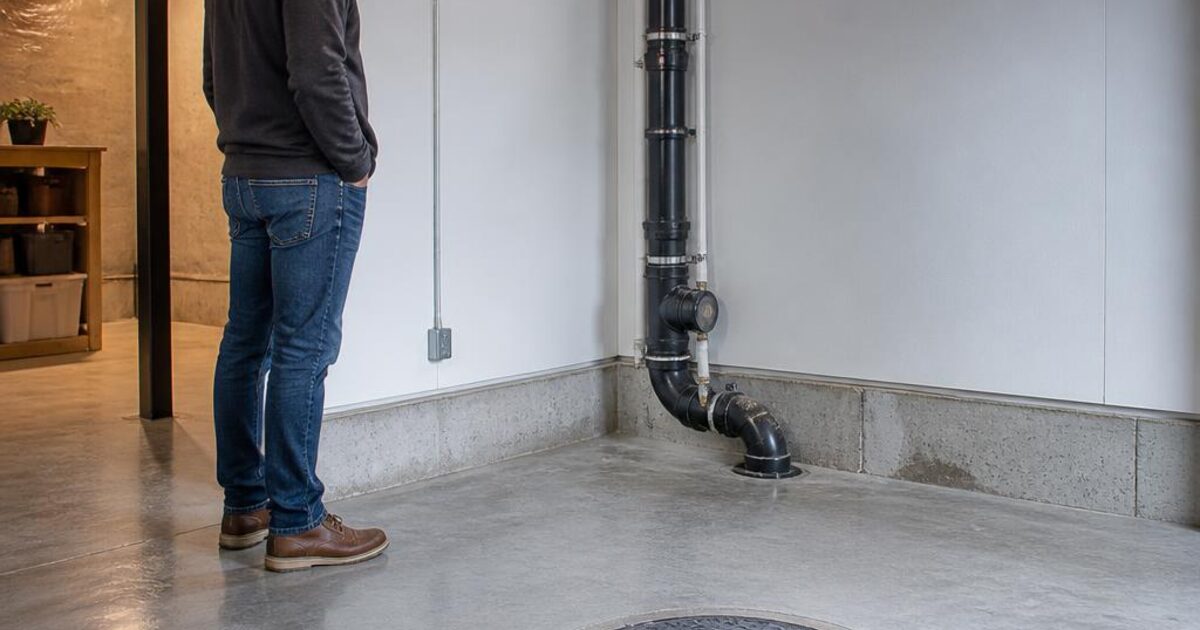
If a backwater valve alarm sounds or the valve has closed, stop using toilets, sinks, showers, laundry machines, dishwashers, and other connected fixtures. Keep people and pets away from wastewater. Do not open the valve; contact the City or a plumber depending on whether the concern appears to be public or on your property.
This guide is for Ottawa homeowners who need to understand a backwater-valve alarm during a possible sewer backup. The steps below reflect the City of Ottawa’s public guidance, not a site inspection or a diagnosis of a particular valve. If water or sewage is entering the basement, treat the area as a safety concern and get help rather than trying to repair the device.
What does a backwater valve alarm mean?
A backwater valve sits on a sanitary or storm sewer lateral. During normal drainage, its gate remains open so water can leave the home. If water in the sewer reverses toward the house during a surcharge, the gate is designed to close and help block that reverse flow through the protected connection.
An alarm may be added to alert you that the valve has engaged. The alarm does not automatically mean the device is broken or that sewage has already entered the basement. It can mean the valve is doing its protective job. But while the valve is closed, water used inside the home may not be able to drain through that connection.
The City’s Residential Protective Plumbing FAQ says not to shower, flush toilets, or wash clothing while the valve is engaged. The same practical rule applies to sinks, dishwashers, and other fixtures connected to the affected drainage system: pause water use until the alarm and valve status show that normal drainage has resumed.
What should you do when the alarm sounds?
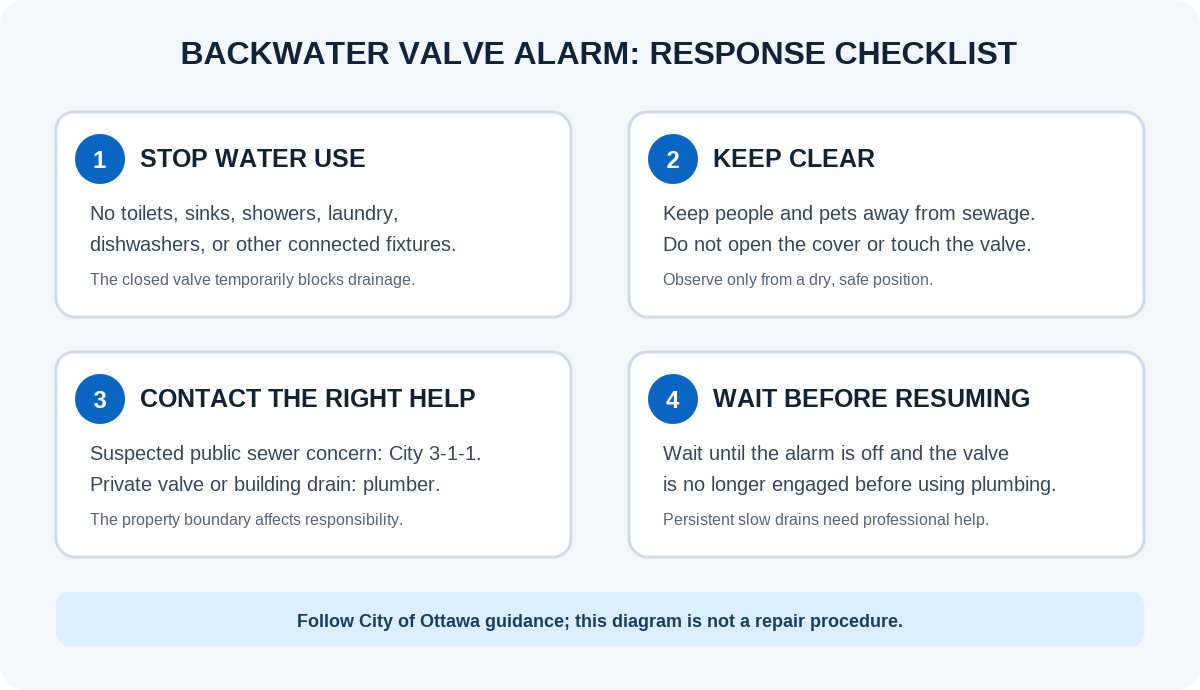
- Stop water use. Tell everyone in the home not to flush toilets, run taps, shower, use the washing machine, or start the dishwasher. A quick flush still sends wastewater into the home’s drainage system.
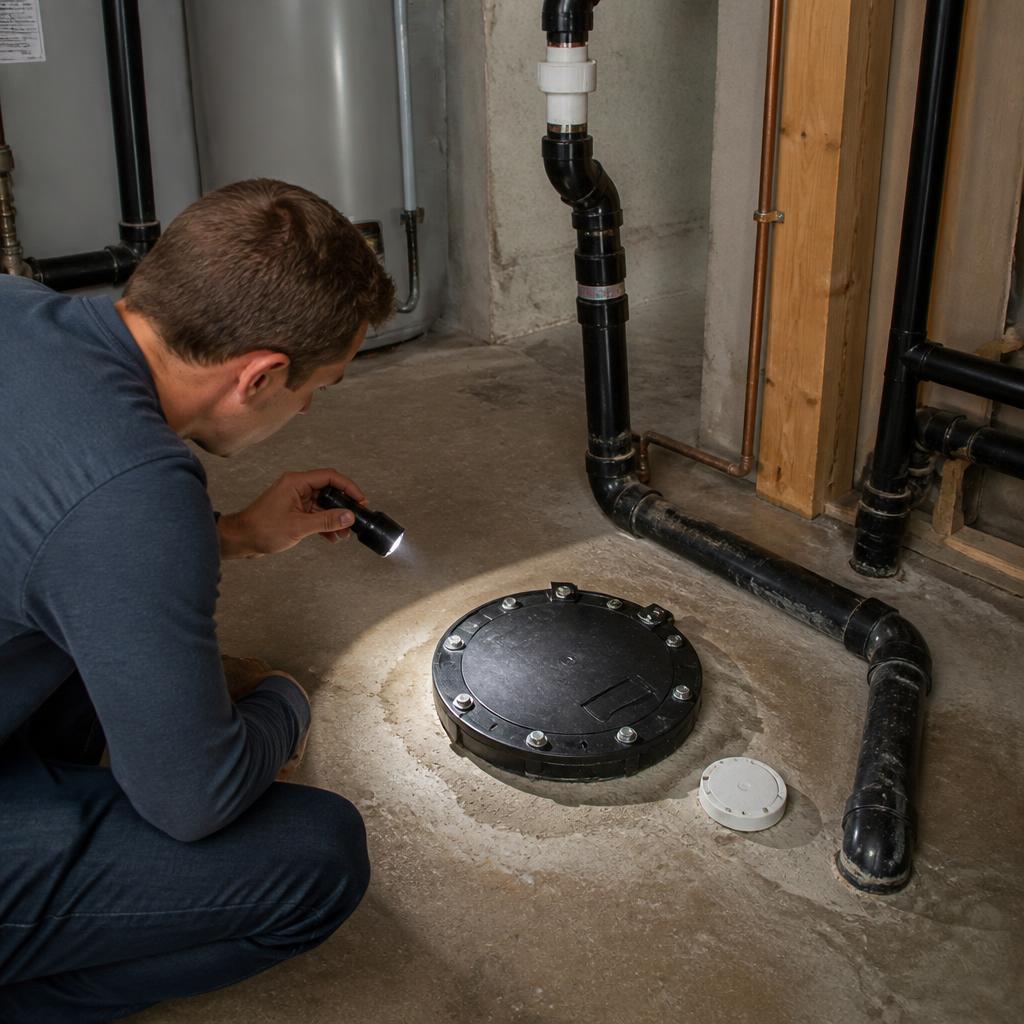
- Keep clear of the valve and any water. Observe from a dry location. Do not remove the cover, reach into an access opening, or touch a valve that may be in contact with wastewater.
- Look for signs without entering a wet area. From a safe, dry position, note whether water is appearing at a floor drain, toilet, or other low fixture; whether the alarm remains active; and whether drains elsewhere in the home have changed. Do not step into standing water to investigate.
- Contact the appropriate help. A private building drain or backwater valve concern belongs with a qualified plumbing professional. If you suspect a City sewer-main or street-side issue, contact the City through 3-1-1. If you cannot tell which side is affected, explain the symptoms to both the City and a plumber rather than opening the valve yourself.
- Wait for the valve to disengage. Do not resume normal water use just because the alarm has become quieter. The City says routine use can resume when the alarm is off and the valve is no longer engaged.
If the alarm returns, water keeps rising, or a fixture remains slow after the valve appears to reopen, keep water use paused and ask a plumber to investigate. A repeating alarm may have a different cause from the first event, and a homeowner cannot determine the valve’s condition from the alarm alone.
What should you avoid during a suspected sewer backup?
- Do not keep using plumbing. The City warns that additional water may not flow out while the valve is engaged. Continued use can create another route for wastewater to surface in the home.
- Do not open, force, or reset the valve. The valve is part of a drainage system under unusual conditions. Opening or manipulating it during a surcharge could expose you to contaminated water or interfere with its protective function.
- Do not pour drain cleaner into a backed-up fixture. A chemical product cannot resolve a sewer surcharge and could create a separate hazard for anyone who later needs to work on the drain.
- Do not assume silence means the system is clear. The alarm may stop for reasons unrelated to normal drainage. Follow the visible valve indicator if present and ask a professional if its status is uncertain.
- Do not walk through sewage or water near electrical equipment. Keep children and pets out of the affected area. If water is close to electrical outlets, appliances, or a panel, stay out and seek qualified help.
Routine backwater-valve inspection is different from emergency response. The City advises property owners to maintain protective plumbing periodically and before forecast heavy rain, following the manufacturer’s directions. If you are unsure how to inspect a valve, arrange a professional service visit when the system is not actively engaged.
Should you call the City of Ottawa or a plumber?
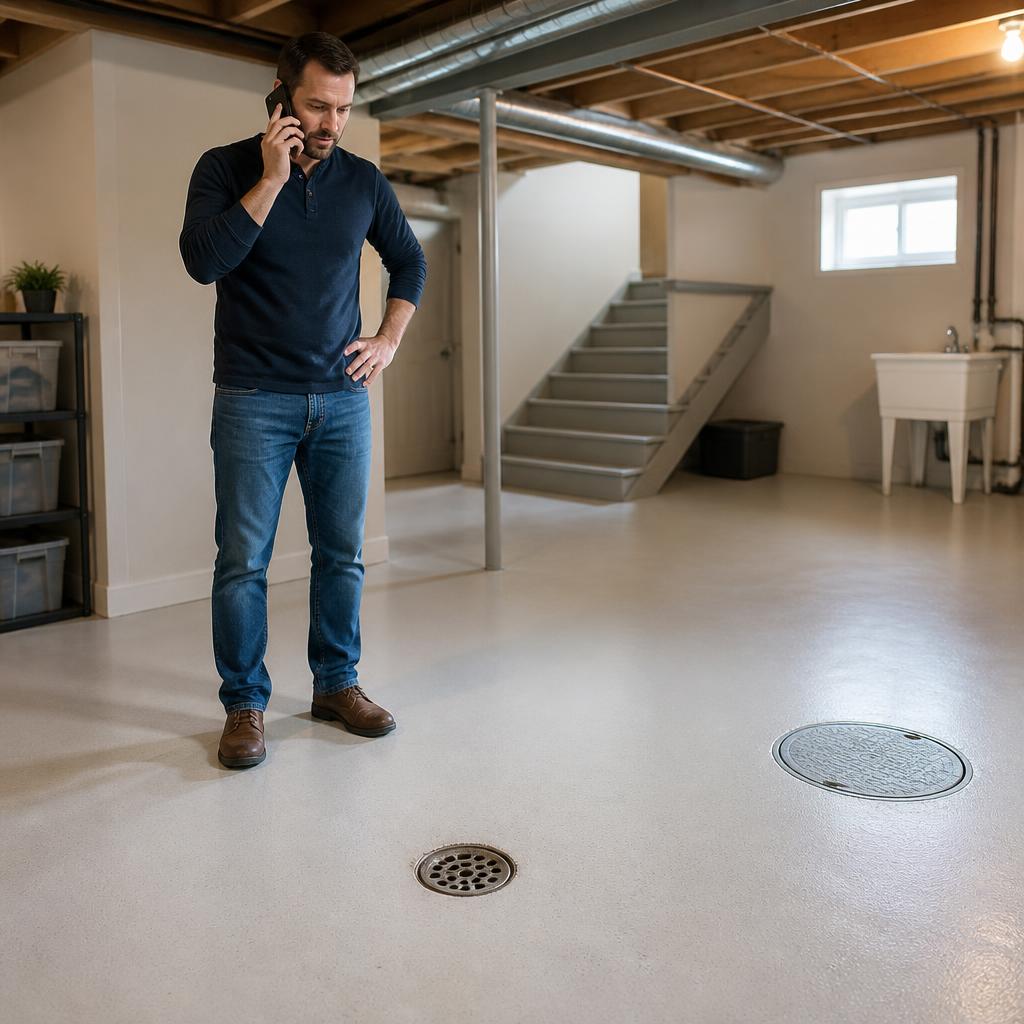
Start with where the problem may be. The City’s protective-plumbing FAQ explains the sewer-lateral responsibility boundary: the property owner is responsible for the pipe from the property line to the home, while the City is responsible from the property line to the sewer main. This distinction can help determine whether a private plumber, City 3-1-1, or both should be contacted.
If a public sewer concern is suspected—such as a problem affecting the street or more than one property—report it through the City’s 3-1-1 service. A plumber can assess a private lateral, building drain, or valve on the property side. The symptom alone may not identify where a blockage or surcharge is located, so do not delay asking for help while trying to guess which line has failed.
When you call, share the time the alarm started, the fixtures affected, whether water is visible, recent heavy rain or snowmelt, and whether the alarm has changed. If you can safely take a photograph from a dry location, it may help explain the situation. Do not move items through contaminated water just to document damage.
For a private valve or installation question, contact a qualified plumbing professional and confirm the service scope directly; this article does not imply a site inspection or guarantee that a particular device is suitable.
Does a backwater valve protect against every basement flood?
No. A backwater valve addresses reverse flow through the sanitary or storm sewer connection it protects. It cannot stop groundwater coming through foundation cracks, rain entering through a window well, surface water flowing under a door, or water caused by a failed sump pump.
Ottawa homes can have different drainage layouts, especially older properties where foundation drains and sewers may have been connected in different ways over time. A home can have a functioning backwater valve and still take on water through another pathway. That is why the City recommends broader prevention measures such as keeping water away from the foundation, maintaining protective plumbing, and checking the drainage route.
If water appears but the backwater-valve alarm is not active, do not assume the valve is the cause. Note where the water first appears and whether the event follows rain, snowmelt, fixture use, or a power outage. A plumber or the City can use that information to narrow down whether the likely source is the private drain, public sewer, foundation drainage, or overland water.
Water coming directly from a hot-water tank is another separate problem. Our leaking water heater guide explains safe first observations, while the water-heater leak service page covers that service rather than sewer-backup work.
When is it safe to resume normal plumbing use?
The City’s FAQ gives a direct condition: resume routine use when the alarm and the engaged valve status have cleared. There is no reliable universal number of minutes to wait because the event and the valve’s operation vary. If the valve is not visible, its indicator is unclear, or the alarm continues, get professional guidance rather than testing it by flushing a toilet.
After a backup, ask whether the valve needs inspection or cleaning and whether any debris, damage, or slow drainage should be addressed. If you notice recurring alarms, gurgling, repeated slow drains, or water at a low fixture, document the pattern and arrange an assessment before the next heavy rain or spring thaw.
Keep the access point unobstructed so it can be inspected according to the manufacturer’s instructions. Do not cover it with flooring or storage. When you have a service visit, ask the professional to show you the alarm indicator, explain what “engaged” looks like on your model, and tell you exactly when to stop using fixtures.
Backwater valve alarm questions
What does a backwater valve alarm mean?
It may mean the valve has engaged during a sewer surcharge and is restricting reverse flow toward the home. The City of Ottawa says to stop using plumbing fixtures until the alarm is off and the valve is no longer engaged.
Can I flush the toilet while a backwater valve is closed?
No. Do not flush, shower, run sinks, wash clothes, or use connected fixtures while the valve is engaged. Wastewater may have no route out until the valve reopens.
How long should I wait before using plumbing again?
There is no fixed wait time for every home. Resume routine use only when the alarm is off and the valve is no longer engaged. If the alarm returns or the drains remain slow, contact a plumber.
Should I open the valve cover to check it?
No. Do not open or manipulate the valve during a suspected backup. Keep clear of wastewater and arrange a professional inspection if the valve’s status is uncertain.
Who is responsible for an Ottawa sewer lateral?
The City says owners are responsible from the property line to the home, and the City is responsible from the property line to the sewer main. Contact 3-1-1 for a suspected public sewer concern and a plumber for a private building drain or valve issue.
Does a backwater valve prevent every kind of basement flood?
No. It protects against reverse flow through its connected sewer line, not groundwater through foundation cracks, surface water through doors or windows, or sump-pump failure.
Sources and editorial note
Reviewed November 13, 2026. This educational guide is based on the sources below and is not a site-specific inspection, plumbing diagnosis, or substitute for City direction during an active event.
- City of Ottawa: Residential Protective Plumbing Program FAQ — valve operation, alarm response, fixture-use guidance, and service-line responsibility.
- City of Ottawa: Causes of basement flooding — sewer surcharge, private lateral blockages, snowmelt, and overland flooding.
- City of Ottawa: How to prevent basement flooding — homeowner prevention and protective-device maintenance guidance.
- City of Ottawa: Contact 3-1-1 — City service contact options.
Related: Ottawa sump-pump discharge and winter routing guide.