
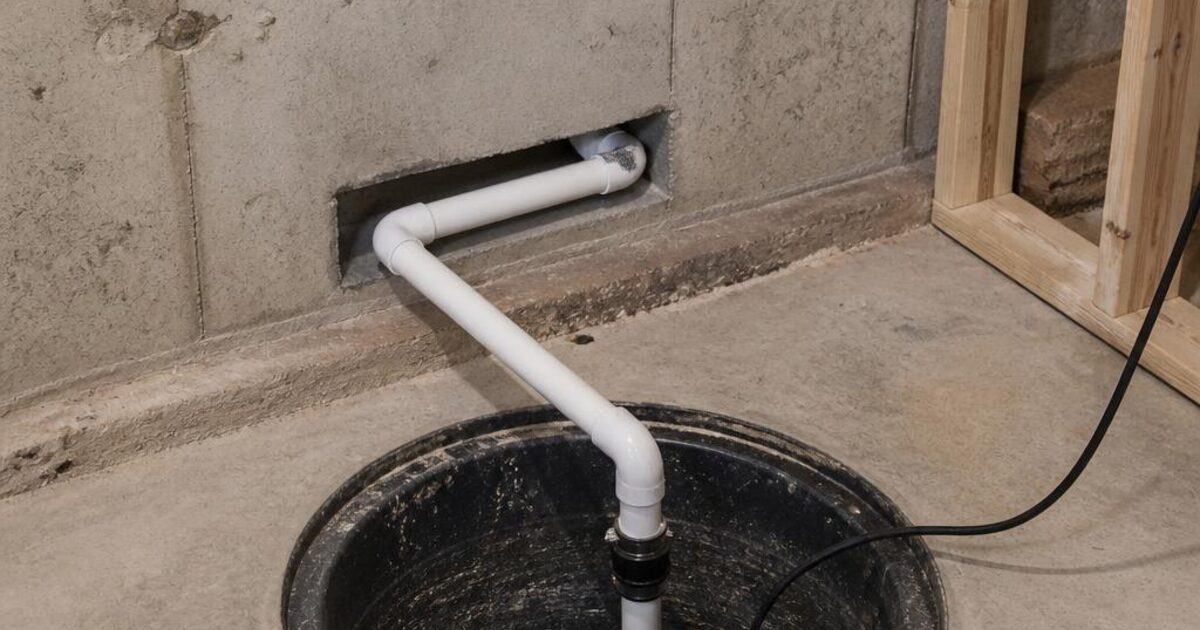
The City of Ottawa advises that sump-pump water should go to the storm sewer or discharge onto the ground at least 1.2 metres from the home’s foundation. Keep the visible outlet clear, direct water so it does not return toward the house, and confirm the approved route before changing a buried pipe or sewer connection.
A sump pump can only move water if the outlet path is open. In Ottawa, that matters during spring thaw and heavy rain, and again when snow or ice can cover an exterior outlet. This guide focuses on the last part of the system: where pumped water goes, how to distinguish sump-pump discharge from roof runoff, and what homeowners can safely observe before asking for plumbing help.
The measurements below come from the City of Ottawa’s public homeowner guidance, reviewed November 13, 2026. They are not a design for every property. A home’s drainage layout, slope, lot boundaries, and existing connections affect what outlet is suitable. Do not use a general article as permission to reroute a pipe or connect it to a sewer.
How can you trace a sump-pump discharge route?
Start with the visible parts of the system, not a shovel. From a dry, safe position, look for the sump basin cover in the basement and the small discharge pipe leaving the pump area. Follow the visible line only as far as you can see it. Many systems pass through a foundation wall and terminate outside near grade; others use an existing approved connection. The pipe route is not always obvious from the exterior alone.
Do not remove the sump cover or reach into the pit just to identify a pipe. The pump contains electrical components, and water may be present. If the cover is loose, damaged, or difficult to move, leave it alone and ask a professional. A homeowner can record where the outside outlet appears, whether water flows from it during normal pump operation, and whether water is pooling close to the foundation.
Keep roof runoff separate in your notes. A downspout is usually a larger pipe descending from the eaves. A sump-pump discharge is a smaller pipe connected to the basement pit. They may appear close together on the same wall, but they serve different systems and the City gives different distance guidance for each.
What clearance does Ottawa recommend for sump-pump discharge?
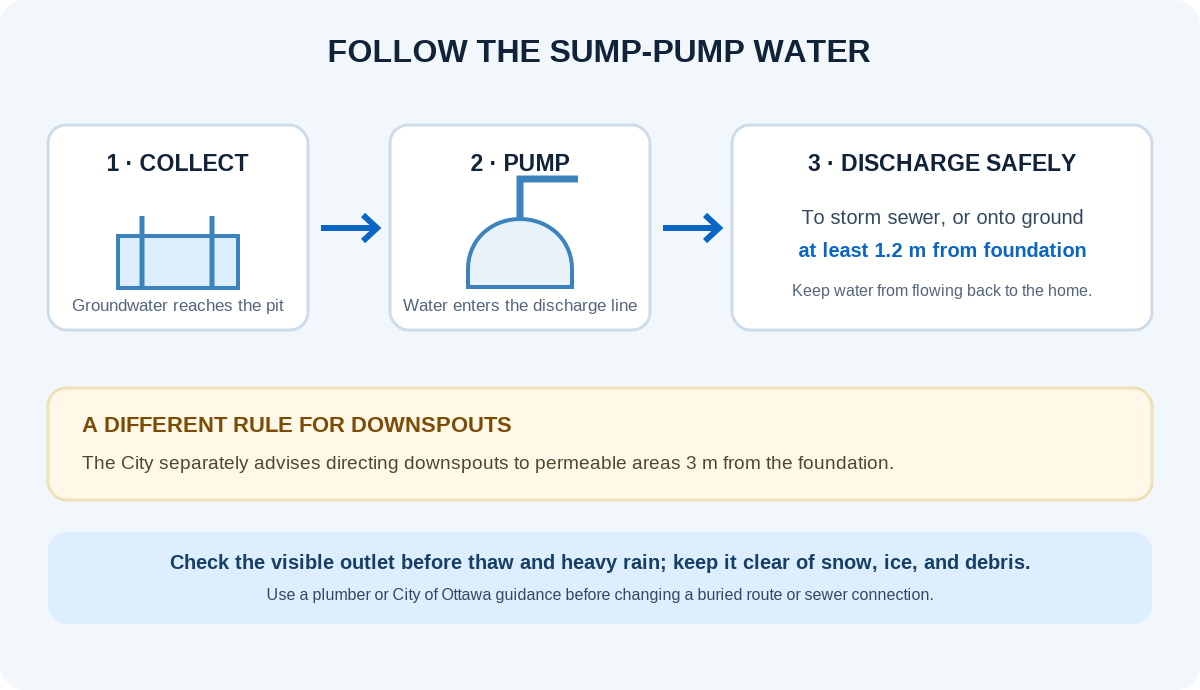
The City’s basement-flooding prevention guidance says to connect the sump pump to the storm sewer or discharge water to the ground at least 1.2 metres from the foundation. The purpose of routing water away from the house is to reduce the chance that it collects near the foundation and returns through the same drainage area.
Do not confuse that sump-pump measurement with the City’s downspout recommendation. The City advises directing roof downspouts to permeable areas 3 metres from the foundation. That separate recommendation concerns roof runoff; it does not replace the sump-pump guidance. If both pipes leave the same side of the house, identify which is which before deciding that the route is too short or moving either one.
| Water source | City homeowner guidance | Do not assume |
|---|---|---|
| Sump-pump water | Connect to the storm sewer or discharge to ground at least 1.2 m from the foundation. | That any nearby drain is an approved connection. |
| Roof downspout | Redirect to a permeable area 3 m from the foundation. | That the downspout and sump-pump distances are interchangeable. |
The exact path matters. The City also says foundation drains should direct water to the storm sewer or sump pump and should not be connected to the sanitary sewer. If you cannot tell where a line goes, do not connect it to a floor drain, laundry tub, or buried pipe based on appearance. Ask a qualified professional or the City before modifying it.
What makes a useful exterior outlet location?
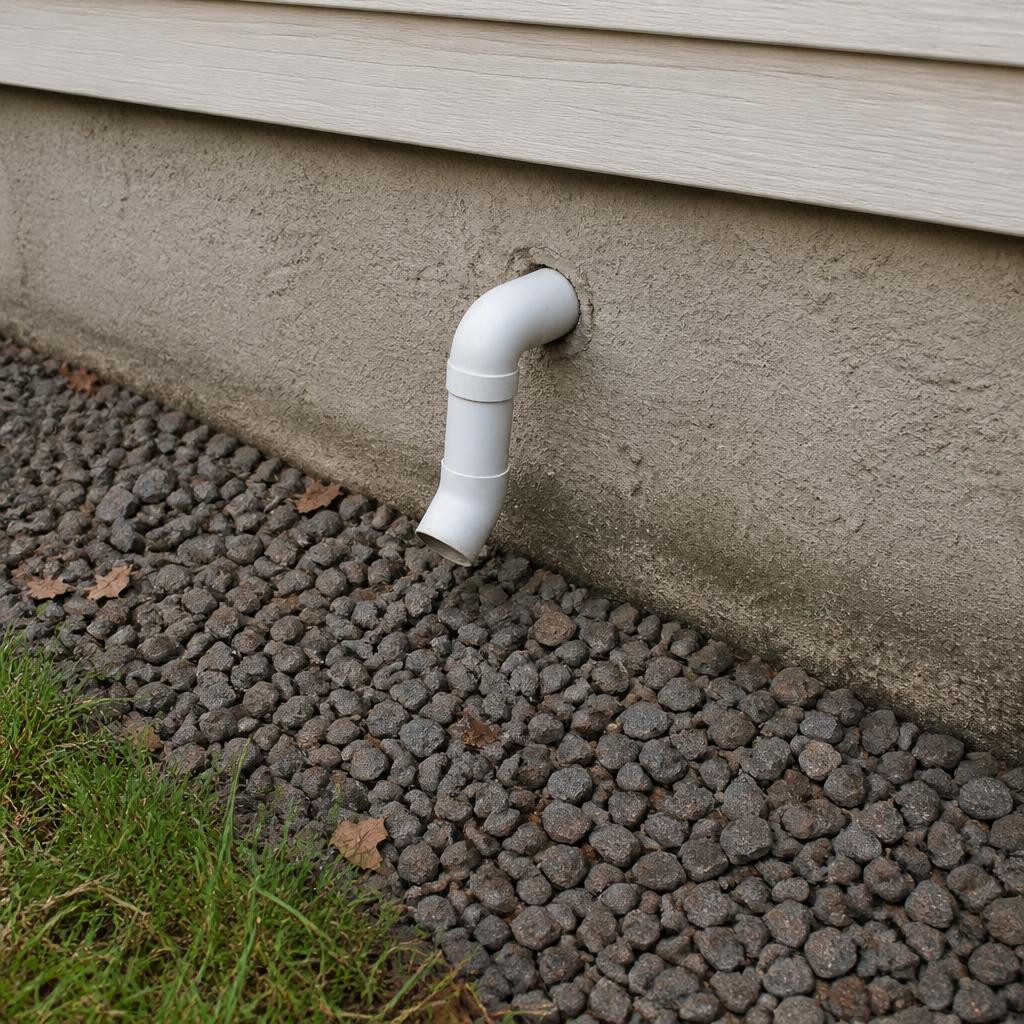
The outlet should move water away from the foundation, not leave a puddle against the wall or send water back toward a basement window. A visible outlet that terminates in a permeable area can allow water to disperse, but the lot’s grade and soil affect where it travels. Water should not be directed toward a neighbouring property, a doorway, a window well, a walking surface that may become icy, or an area where it can flow back to the home.
Observe the area during normal pump operation only if you can do so safely. Look for pooling, erosion, a wet strip along the foundation, water crossing a path, or an outlet that appears blocked. The City’s 1.2-metre guidance is a minimum clearance in its homeowner advice, not a guarantee that every property drains safely at that distance. A steep slope, poor grading, or an unusual lot layout can change the outcome.
If the outlet is connected to a storm sewer, do not assume the connection is correct just because it has worked in the past. Older homes can have drainage arrangements that differ from newer construction. Ask a plumber to identify the route before replacing or extending a pipe. For protective-plumbing installations, the City advises that a building permit is required; ask the City whether a proposed change needs approval before work begins.
What should Ottawa homeowners check in winter?
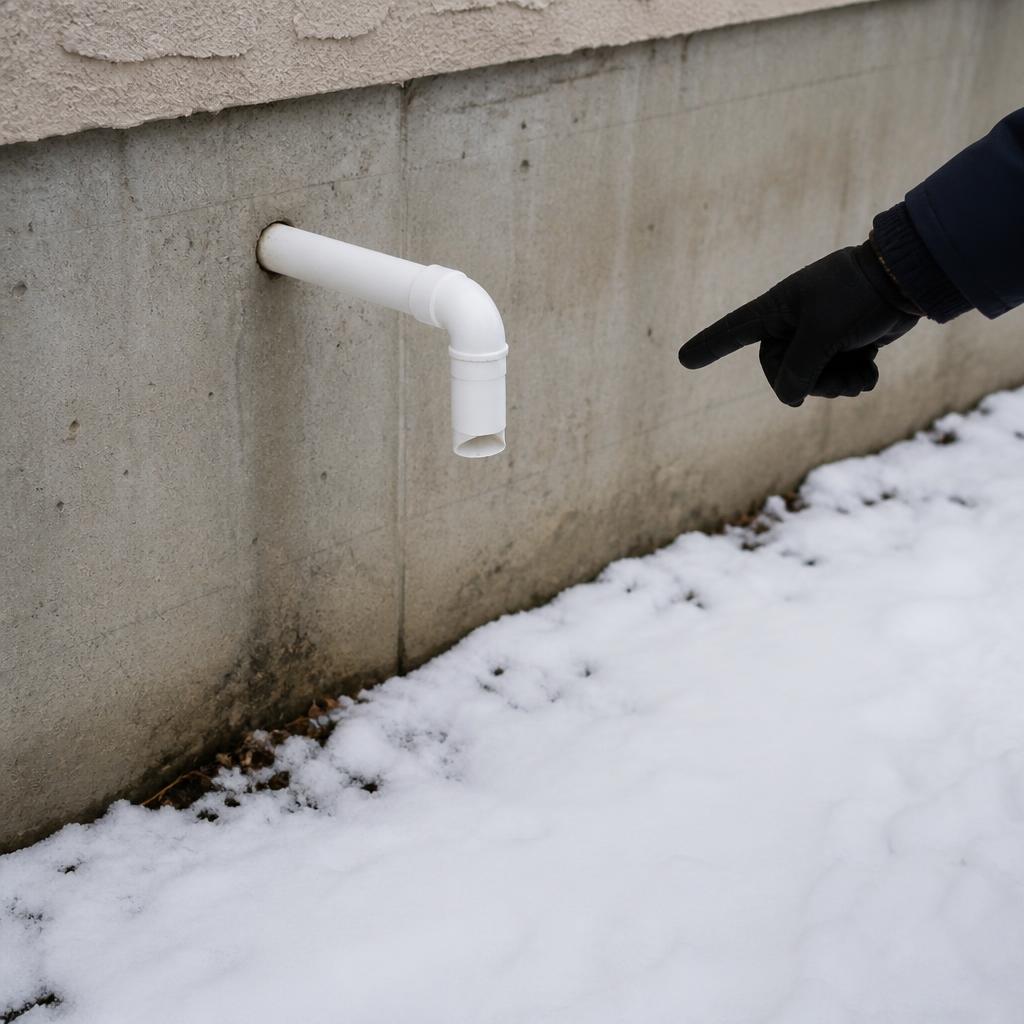
Cold weather can leave the outside end of a discharge route buried in snow or surrounded by ice. A line that cannot release water can affect the pump’s ability to lower the water in the pit. The visible outlet deserves attention before the spring thaw and after a significant snowfall, especially if the pump runs more often than usual or water is collecting near the foundation.
- Look for the outlet from stable ground. Confirm it is not hidden under a snowbank, covered by leaves, or pressed against stored items. Do not climb, reach under a deck, or step onto unstable ice to inspect it.
- Check for water returning toward the home. A recurring wet area near the foundation can indicate that the route, grade, or outlet location needs professional review.
- Notice whether the pump is operating normally. Frequent cycling, unusual noise, or water that remains high in the pit deserves attention. Do not open the basin or touch wiring to investigate.
- Keep the path visible and accessible. If clearing loose snow from around the exterior outlet is safe, do so without pulling apart, cutting, heating, or changing the pipe.
- Plan service before the next wet period. If the outlet repeatedly freezes or the pump cannot keep up, ask a plumber to assess the route, pump, check valve, and discharge arrangement together.
Do not use an open flame, heat gun, chemical, or improvised tool to thaw a pipe. A homeowner cannot confirm whether ice is limited to the visible outlet or extends inside the line. If water is rising in the pit, the pump is running without discharging, or the outlet appears frozen, keep away from electrical components and arrange qualified help.
What are signs that the discharge route needs attention?
- The pump runs but little or no water appears outside. A blocked or frozen outlet is one possibility; pump, float, check-valve, or electrical problems can produce similar symptoms.
- Water repeatedly collects beside the foundation. The outlet may be too close, the surface may slope toward the building, or another source of water may be involved.
- The pump cycles unusually often. Water may be returning through the line, entering the pit quickly, or triggering the float repeatedly. A professional should assess the full system rather than simply swapping the pump.
- The outlet is damaged, disconnected, or buried. A pipe displaced by frost, a mower, landscaping, or stored materials may not deliver water where intended.
- There is water in the basement despite the pump running. A sump pump manages water collected in a pit. It is not designed to stop every kind of sewer backup, foundation seepage, or overland flood.
These signs do not identify a single cause. Write down what happened, when the pump ran, whether the outlet flowed, and whether the weather was rainy, thawing, or freezing. That record gives a plumber useful context and helps avoid guesswork.
Which checks can a homeowner do, and when is a plumber needed?
Homeowners can make a visual note of the exterior outlet, keep loose snow or leaves from hiding it when that can be done safely, watch for water returning to the foundation, and follow the pump manufacturer’s user instructions. Keep the area around the sump cover accessible and know where the alarm can be heard.
Leave electrical work, pump disassembly, buried-pipe tracing, sewer connections, and changes to the discharge route to qualified professionals. Do not lean into a sump pit, handle plugs or controls with wet hands, or enter standing water near electrical equipment. If the basement is flooding, prioritize distance and professional assistance over a test.
A sump pump and a backwater valve also do different jobs. A sump pump moves groundwater collected in a pit. A backwater valve helps restrict wastewater or stormwater from reversing through the sewer lateral it protects. Some homes may need more than one measure, but a valve does not replace a sump pump, and a sump pump does not stop a sewer surcharge.
If the water is coming from a hot-water tank instead of the sump area, use the water heater leak checklist to understand that separate issue. The site’s water-heater leak service details describe tank-leak work, not sump-pump or sewer-backup service.
If you need a professional to review a sump-pump installation or discharge route, confirm the service scope directly with a qualified plumbing provider. A general guide cannot determine whether a specific outlet or pit is suitable.
Sump-pump discharge questions
Where should a sump pump discharge in Ottawa?
The City says to connect it to the storm sewer or discharge to ground at least 1.2 metres from the foundation. Confirm the route for your property before modifying buried piping.
How far from the foundation should the sump-pump outlet be?
The City’s homeowner guidance says at least 1.2 metres when discharging to ground. The City gives a separate 3-metre recommendation for roof downspouts; the measurements apply to different systems.
Can a sump-pump discharge line freeze in Ottawa?
Snow, ice, or a blocked outlet can interfere with discharge in winter. Check the visible outlet from a safe position and call a professional if water rises in the pit or the pump runs without moving water.
Can sump-pump water go into a sanitary sewer?
Do not assume a sanitary sewer is an approved destination. The City says foundation drains should not connect to the sanitary sewer and identifies storm-sewer or suitable ground discharge for sump-pump water.
Is the sump-pump distance the same as the downspout distance?
No. The City guidance is at least 1.2 metres from the foundation for sump-pump water discharged to ground and 3 metres for downspouts directed to permeable areas.
What if the sump-pump outlet is buried in snow?
From a stable, dry location, check whether loose snow is covering the visible outlet. Do not dismantle, heat, or modify the line. If the pump cannot discharge, arrange professional help.
Sources and editorial note
Reviewed November 13, 2026. This homeowner guide summarizes the City sources below and is not a plumbing design, site inspection, or approval for a sewer connection.
- City of Ottawa: How to prevent basement flooding — sump-pump discharge destinations and distance, downspout guidance, and drainage maintenance.
- City of Ottawa: Causes of basement flooding — foundation drains, sewer surcharge, and overland water.
- City of Ottawa: Residential Protective Plumbing Program FAQ — sump-pump basics, required permit for protective plumbing installations, and protective-device limits.
- City of Ottawa: Residential Protective Plumbing program — current eligibility and program details.
Related: what to do when an Ottawa backwater-valve alarm activates.