
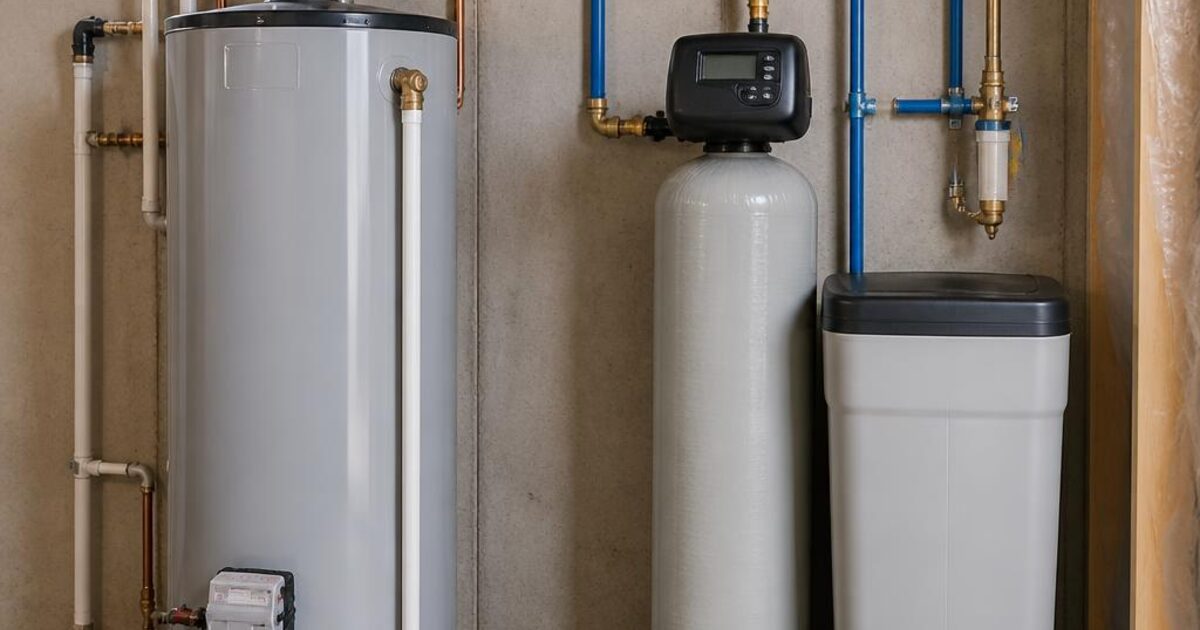
Not every Ottawa home needs a water softener. The City describes Ottawa River water as very soft and says its municipal drinking water meets health standards. Municipal well systems and private wells can differ, so identify your source and test for the specific issue before choosing a device. A softener does not make unsafe water safe.
Ottawa homeowners searching for a water softener may see broad claims about hard water, scale, or appliance damage. Those claims do not establish what is in the water at a particular address. The City of Ottawa distinguishes its Ottawa River supply from municipal well systems, and private wells require their own testing. That source-specific distinction is the first step in deciding whether a water softener is useful.
This guide uses City of Ottawa and Health Canada information reviewed November 27, 2026. It is general education, not a water test or treatment recommendation. If a salesperson says your tap water is unsafe or that a softener is required for health, verify the claim with the City, Ottawa Public Health, or a qualified laboratory before purchasing equipment.
Is Ottawa water always the same across the city?
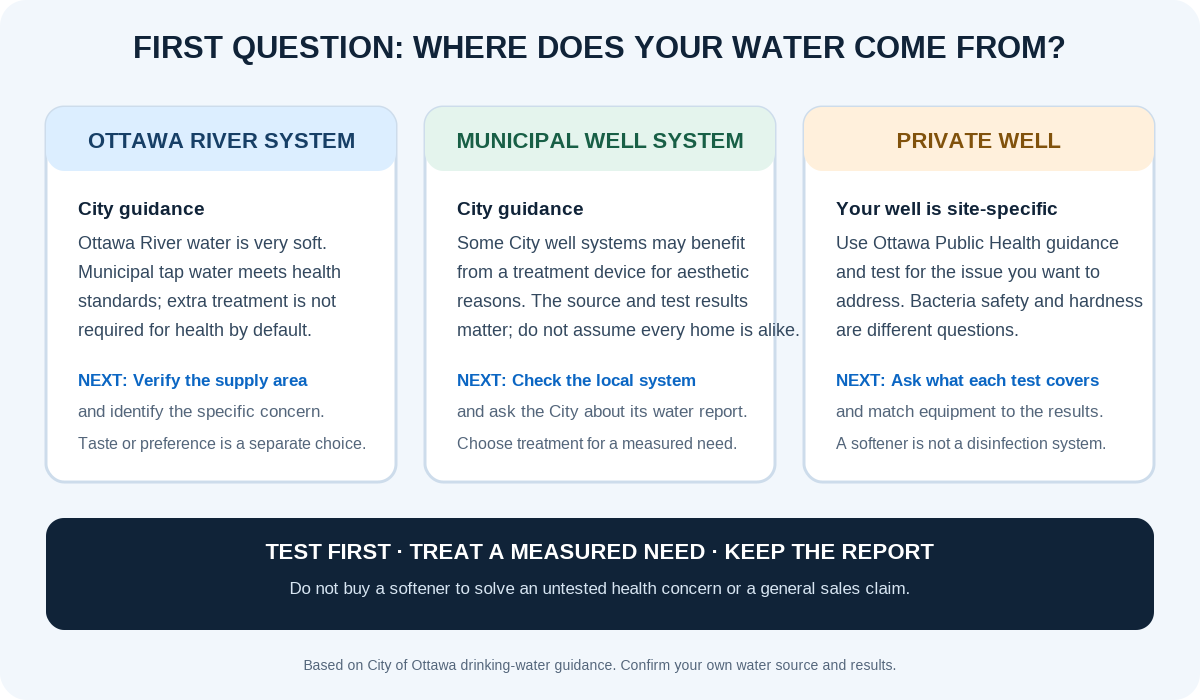
No. A home may be served by the Ottawa River municipal system, one of the City’s municipal well systems, or a private well. The City’s water purification page says Ottawa River water is very soft. Its drinking-water FAQ says the City’s municipal drinking water meets federal and provincial standards and notes that some municipal well systems may warrant an in-home treatment device for aesthetic reasons.
That guidance does not mean every urban home needs a softener, or that every well needs the same equipment. It means the source matters. A private well can vary from a neighbouring property, and an appearance or taste issue can have causes other than hardness. Testing should identify the condition before you select treatment.
| Water source | What the City guidance says | Useful next step |
|---|---|---|
| Ottawa River municipal supply | The City describes the source water as very soft and says municipal drinking water meets health standards. | Confirm the address is on this supply and identify the specific aesthetic or plumbing concern. |
| Municipal well system | The City says a treatment device may be considered for aesthetic reasons in some systems. | Check the relevant system information and ask what a device would address. |
| Private well | The City directs private-well residents to Ottawa Public Health for well-water information. | Follow current sampling guidance and request a test for the exact parameter in question. |
What does a water softener do—and what does it not do?
A conventional salt-based softener is designed to reduce hardness minerals, commonly calcium and magnesium, through an ion-exchange process. Depending on the incoming water and how equipment is set up, that can reduce the mineral scale associated with hard water. It is a treatment for a specific water characteristic, not a universal filter.
A softener does not disinfect water, remove every contaminant, or certify a private well as safe. It is not a substitute for the tests and treatment recommended for bacteria, nitrate, arsenic, lead, or other health-related concerns. If safety is the issue, use Ottawa Public Health and Health Canada resources to determine the right testing and treatment path.
Products described as “salt-free conditioners,” filters, and ion-exchange softeners may work differently. Ask what parameter a device is designed to change, how that change is measured, what standard or certification applies, and whether it matches your actual test result. Do not assume that a product called a conditioner softens water in the same way as a salt-based system.
How can you identify the water source at your address?
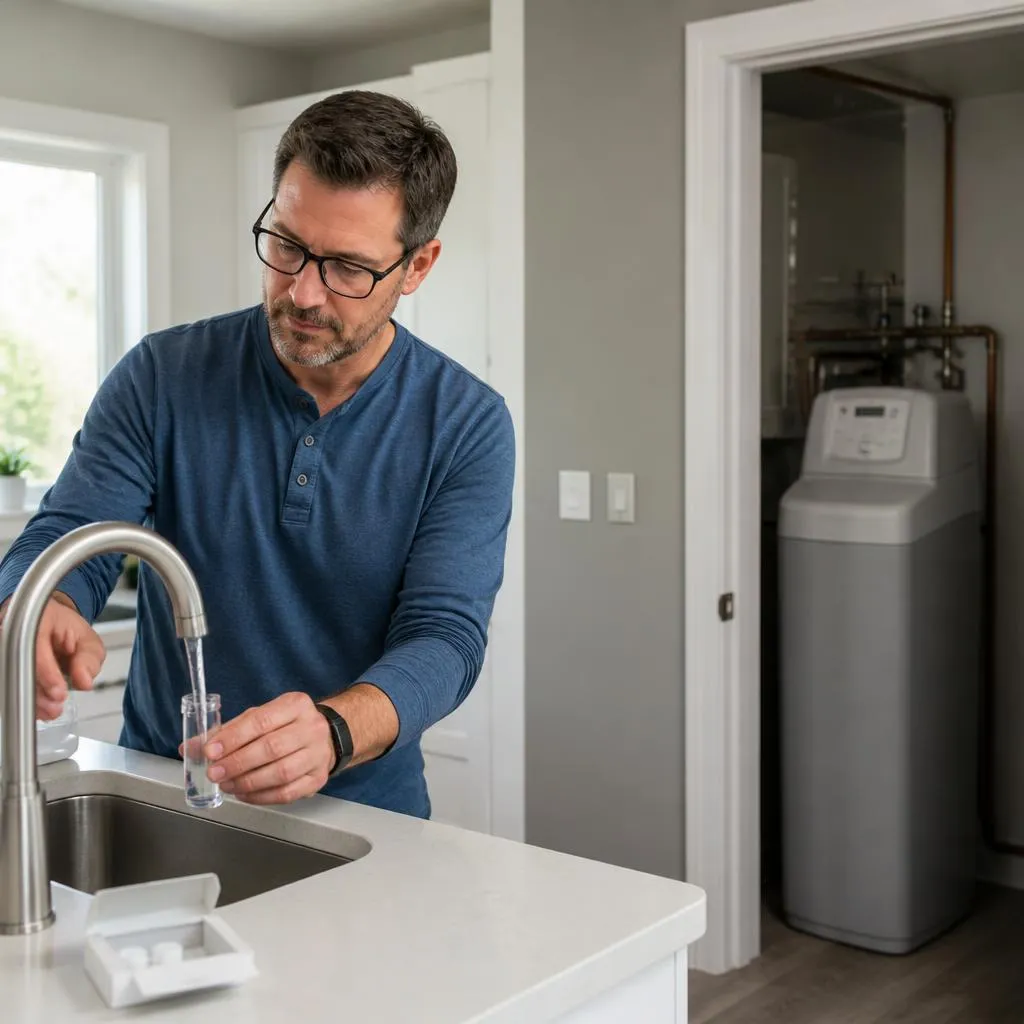
- Check the water bill or property records. Municipal billing or a water account may identify a City-served address. If you have recently moved or are unsure, contact the City rather than inferring the source from the neighbourhood name.
- Ask whether the home uses a municipal well system. Some City systems use wells rather than Ottawa River water. The City’s FAQ treats these separately, so verify the service area for the exact property.
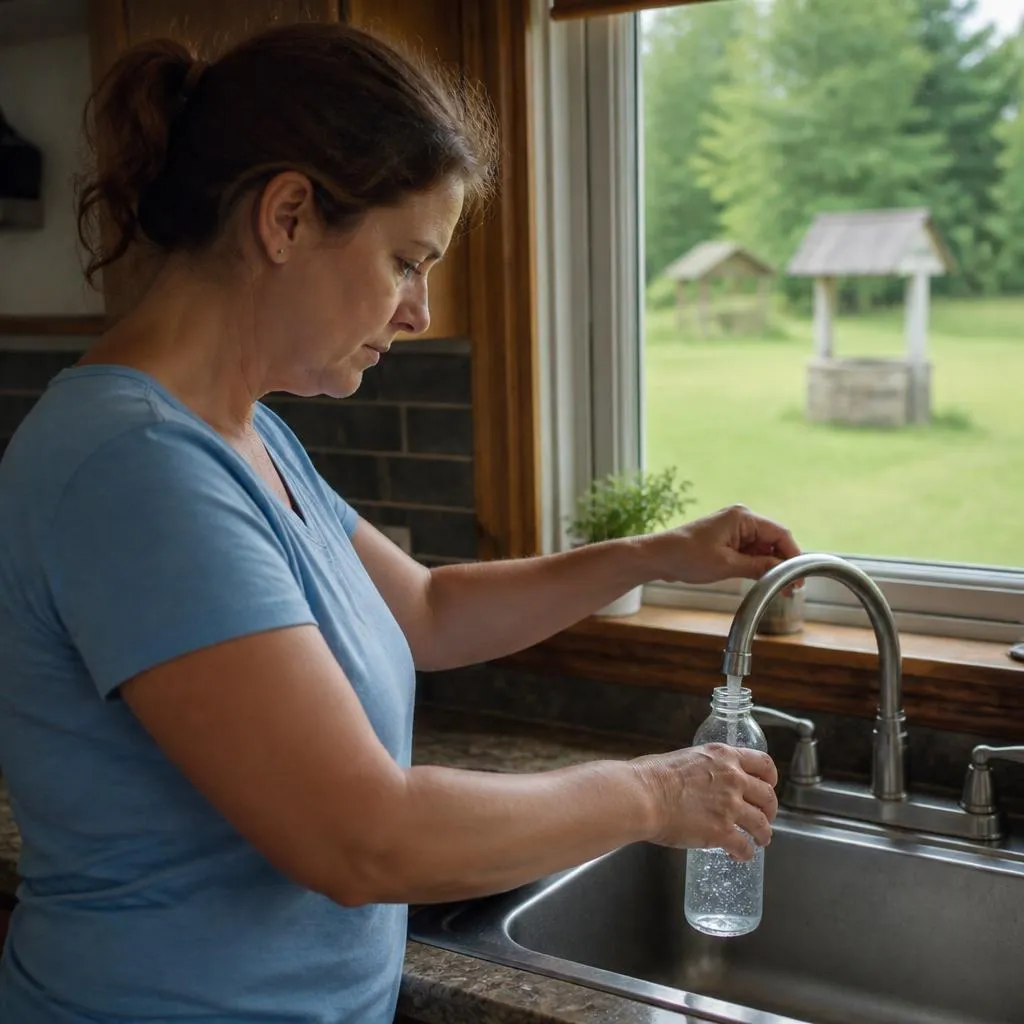
- Confirm whether the property has a private well. Rural homes may have a private source even when they are within the City of Ottawa boundary. A municipal boundary does not prove that a specific house is connected to the municipal water network.
- Keep past test results with the address. If a previous owner supplied a report, check its date, sample location, and the parameters measured. Do not assume an old result describes the current system or your current concern.
For private wells, Ottawa Public Health publishes sampling instructions and information about its well-water testing program. Follow the current collection instructions exactly and contact the program to confirm which tests are included. A bacterial sample and a hardness analysis answer different questions; if you want to evaluate a softener, explicitly ask for hardness to be measured.
What should you ask before buying a softener?
Ask the provider to put the source, test result, and proposed treatment in the same written assessment. A useful quote should explain what the device is intended to change, how it is sized for the measured water and household use, where it will be installed, what maintenance it needs, and what it will not address. If the recommendation relies on a test strip or demonstration, ask for the measurement units and a copy of the result.
- What water source serves this home, and how was that confirmed?
- What test was performed, where was the sample collected, and which parameters were measured?
- What result specifically supports a softener, and what is the result’s unit?
- Is the equipment a softener, a conditioner, a filter, or a combination? What does each component do?
- What routine supplies, discharge, drain access, and service does the system require?
- What is included in the written installation scope, warranty, and service plan?
Health Canada says a treatment device may be used for taste or appearance as a personal choice, and that the need depends on the individual situation. It also recommends choosing a device certified to the applicable NSF/ANSI performance standard; for cation-exchange water softeners, that includes NSF/ANSI 44. A certification verifies only the claims covered by that standard. The City also warns residents to be cautious of door-to-door sales claims that municipal tap water is unsafe. A measured, specific concern is a better basis for treatment than a broad claim about health or appliance damage.
Can a water softener help a water heater?
It can only address the hardness component that a test confirms. A softener is not a repair for a leaking tank, a failed thermostat, a pressure problem, a blocked drain, or an aging appliance. If a water heater is noisy, leaking, or producing inconsistent hot water, follow the manufacturer’s instructions and arrange the appropriate water-heater assessment rather than assuming hardness is the cause.
Water conditions are one factor in home maintenance, not a reason to install equipment automatically. Compare any water test with the water-heater manufacturer’s maintenance guidance. Our Ottawa water-heater maintenance checklist covers routine heater care, while this guide focuses on whether water treatment is warranted.
If a test supports softening, compare the equipment and service scope using the same method as a rental or ownership decision. The companion Ottawa water-softener rental-versus-buying worksheet shows how to compare total costs and contract terms without relying only on a monthly payment.
What should you plan for if a softener is appropriate?
Before installation, ask where the unit will sit, how a plumber will connect it to the home’s water line, whether a bypass is included, and what access is needed for service. If the selected equipment regenerates, ask how its drain and overflow connections will be handled. Some systems also need a nearby power source. The product manual and the installer’s assessment should determine the requirements for that specific model.
Ongoing care varies by system and water conditions. Ask which consumables it uses, how to recognize a service issue, and what the manufacturer’s maintenance schedule says. Confirm whether the quote includes setup and follow-up checks, and keep the manual, test report, warranty, and installer details together. A clear plan helps you tell routine care apart from a new water-quality concern.
How can you avoid buying the wrong treatment?
Be cautious if the recommendation begins with fear instead of a test result, if a salesperson calls municipal water unsafe without a specific contaminant result, or if a quote describes every water-treatment product as a “softener.” Ask for the test report, device model, written scope, warranty, and recurring costs. Take time to compare them.
Do not rely on a generic hardness number from another city, a neighbour’s home, an old listing, or a marketing page. The City’s water guidance distinguishes its Ottawa River system, municipal well systems, and private wells. A professional should explain which supply applies to your address and how the proposed device relates to that supply.
If you have a private well and are concerned about drinking-water safety, contact Ottawa Public Health and use Health Canada resources before deciding on a softener. If the issue is taste or scale, ask for testing that measures the relevant property. If treatment is not supported by the evidence, waiting is a valid decision.
Can spots, stains, or taste prove you need a softener?
Not by themselves. A visible residue or a change in taste can be a useful reason to investigate, but it does not identify the cause. Hardness is one possible property; other minerals, plumbing materials, a fixture, or the way a sample was taken can affect what you notice. Treat a symptom as a question to test, not as a diagnosis.
When you request an assessment, describe where and when the issue appears. Is it at every cold tap or only one fixture? Did it begin after a plumbing change? Does a current test measure hardness, or only bacteria or another parameter? A provider should explain how the result supports the recommended device and what other causes remain outside its scope.
This matters because filters, softeners, and disinfection systems are designed for different purposes. If a recommendation combines several stages, request an itemized explanation of what each stage addresses, the applicable performance standard, and the expected maintenance. That makes it easier to compare the offer with public-health advice and another independent assessment.
Ottawa water-softener questions
Does Ottawa city water need a softener?
The City describes Ottawa River water as very soft and says municipal drinking water meets health standards. A softener is not automatically required for a home on that supply. Confirm your source and the specific concern before buying equipment.
Is Ottawa water soft or hard?
The City says water from the Ottawa River is very soft. Municipal well systems and private wells are different sources; check the City guidance or get a test for your address instead of assuming every Ottawa home has identical water.
Should a home on an Ottawa municipal well use a softener?
The City says some municipal well systems may justify an in-home treatment device for aesthetic reasons. That does not mean every address needs one. Check the relevant system information and test for the concern.
How do I test hardness in private-well water?
Contact Ottawa Public Health for current private-well sampling guidance and ask the laboratory or water professional to test hardness specifically. A bacteria test and a hardness result answer different questions.
Does a water softener make well water safe to drink?
No. A softener is not a disinfection system and does not replace private-well testing or treatment for a health-related contaminant. Follow Ottawa Public Health and Health Canada guidance for water safety.
Can a water softener help protect a water heater?
Softening may reduce hardness minerals where a test confirms they are a concern, but it is not a substitute for manufacturer-recommended water-heater maintenance. Confirm the source and water results first.
Sources and editorial note
Reviewed November 27, 2026. This article summarizes public City and federal guidance and does not test or diagnose a home’s water.
- City of Ottawa: Water purification, quality and distribution — source water and municipal treatment.
- City of Ottawa: Drinking-water quality and safety FAQ — municipal supply, well systems, and treatment-device guidance.
- Health Canada: Drinking-water treatment — household treatment devices and their role.
- Ottawa Public Health: Free well-water testing — private-well sampling information.
Related: compare water-softener rental and ownership costs in Ottawa.