

A water-softener rental can cost less upfront; buying may suit a homeowner who needs treatment for longer and compares the full ownership cost. First confirm that softening is appropriate: the City of Ottawa describes Ottawa River water as very soft, while municipal well systems and private wells can differ. Compare test results and written quotes before signing.
Searches for water-softener rental prices often focus on the monthly payment. That number is only one part of the decision. In Ottawa, the better first question is whether the water source and a reliable test point to a real hardness issue. If treatment is appropriate, compare both options over the same number of months and check what the rental agreement actually includes.
This guide does not quote a citywide price or predict how long a particular unit will last. Equipment, water chemistry, household use, installation work, and contract terms vary. Use the worksheet below with current written offers so the choice reflects your home rather than a generic estimate.
Should you confirm the need before comparing offers?
Yes. The City of Ottawa says water from the Ottawa River is very soft. Its drinking-water FAQ says municipal tap water meets federal and provincial standards and warns residents about sales claims that the City supply is unsafe. The same FAQ notes that a treatment device may be considered for aesthetic reasons in some City municipal-well systems.
That means “Ottawa water” does not describe one identical situation. A home supplied by the Ottawa River system is different from a property served by a municipal well, a private well, or another source. If you are unsure which source serves the address, check with the City or the water supplier before choosing a system.
For a private well, ask what the test actually measures. A test for bacteria is not the same as a hardness test, and a softener is not a disinfection system. If the concern is taste, staining, scale, or another specific symptom, describe that concern to a qualified water-treatment professional and request the relevant water analysis—not a sales demonstration alone.
Water-softener rental versus buying is a meaningful comparison only after you establish what problem the equipment is supposed to solve. If an assessment shows that softening is unnecessary, neither a monthly rental nor a purchase is automatically the right next step.
What is the difference between renting and buying a water softener?
With a rental, a provider supplies equipment under an agreement in exchange for recurring payments. Depending on the contract, the agreement may also include some maintenance or repair work. Those details are not standardized. One rental may include parts but not salt; another may include service with limits or fees. The written agreement, not the sales summary, determines what you are paying for.
When you buy, you generally pay an upfront equipment and installation amount or finance it separately. You then take responsibility for ongoing consumables, routine care, and repairs that are outside the warranty. Ownership gives you more control over the system and provider, but it also means you should understand the warranty, maintenance schedule, and service options before purchase.
| Question | Rental | Purchase |
|---|---|---|
| Upfront cash | Often lower, but check setup and delivery charges. | Higher initial outlay or separate financing. |
| Monthly charge | Recurring payment; ask whether it can change. | No rental payment, but financing may apply. |
| Service | Coverage depends on the written agreement and exclusions. | Owner schedules and pays for work not covered by warranty. |
| Moving or selling | Transfer, removal, and buyout terms matter. | Equipment remains with the home unless removed or replaced. |
| Control | Provider and contract can shape service choices. | Owner chooses future service and replacement timing. |
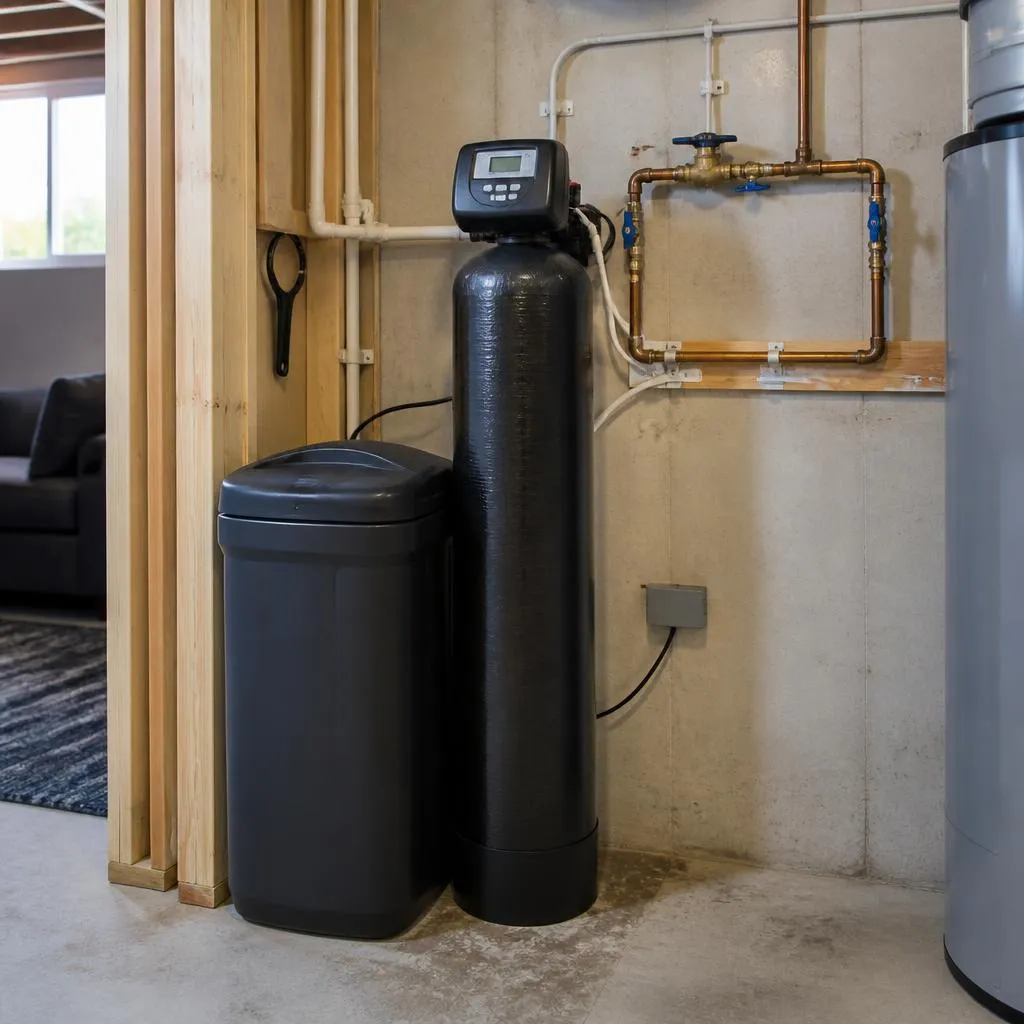
How can you compare the full cost over time?
Pick a realistic time horizon first: the number of years you expect to stay, or the length of time you expect to use the treatment. Then compare a rental and a purchase offer that address the same water results, system capacity, installation scope, and expected household demand.
Estimate the rental total
Start with the monthly payment multiplied by the number of months in your comparison period. Add setup, delivery, tax, salt, service-call charges, rate increases, and any fee for early cancellation, equipment removal, or buyout that could apply. Only subtract the value of included service if the contract clearly says what is covered and you would otherwise have paid for that work.
Estimate the ownership total
Add the equipment and installation quote, financing cost if any, salt or other consumables, scheduled maintenance, and repairs that are not covered by the warranty. Ask whether the quote includes the bypass, drain connection, electrical requirements if applicable, and disposal or modification of existing equipment. Do not assume every installation has the same scope.
Rental total for your chosen period = monthly charge × months + setup and recurring extras + likely exit charges.
Ownership total for the same period = equipment and installation + financing + maintenance + consumables + uncovered repairs.
This is a comparison method, not a promise that the lower number will be the best choice. The rental can include value that matters to you, such as a defined repair commitment; ownership can offer control and avoid a long contract. Write the assumptions beside the totals so you can see which differences are guaranteed and which are estimates.
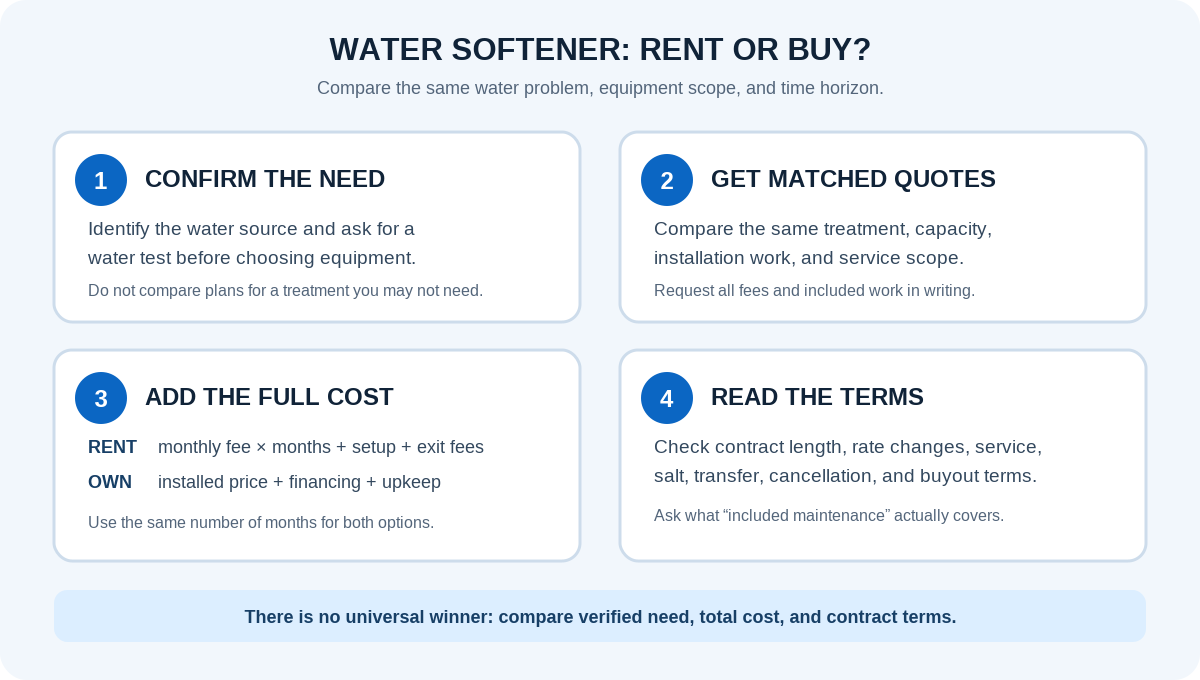
How do you compare the same equipment scope?
A monthly rental and an installed purchase are not comparable if they describe different systems or different work. Ask each provider to identify the treatment type, system capacity, installation tasks, and service assumptions. The recommendation should refer to your water result and household demand—not only the number of bathrooms or the size of a discount.
Request an itemized scope for the plumbing connection, bypass, drain or discharge arrangement if required, setup, and any modifications to existing lines. Ask whether the rental provider can supply the same scope in a written purchase quote, or whether another installer can quote an equivalent system. If a provider says the offers are not comparable, ask which exact equipment or service difference accounts for the gap.
Also note whether quoted maintenance is scheduled, reactive, or both. A plan that includes one kind of service may still leave you responsible for consumables or other visits. Put those assumptions into the comparison so the totals show what each option actually buys.
What should you check in an Ontario rental agreement?
Ontario Consumer Protection guidance says most agreements for a product or service costing more than $50 must be in writing, and the contract should make the terms clear. Consumer rights can depend on how and where the agreement was made, so do not assume a particular cooling-off period or cancellation right without checking the current government guidance and your own contract.
Before accepting a water-softener rental in Ottawa, ask the provider to identify each of these items in writing:
- Equipment: What model or system type is being supplied, and what test results informed the selection?
- Term and payment: Is the agreement fixed-term or ongoing? What is the total monthly amount, and can the rate change?
- Service coverage: Are labour, parts, service calls, and emergency visits included? What exclusions, response windows, or limits apply?
- Consumables: Who supplies salt or other required materials? Is delivery included or separately billed?
- Ownership: Who owns the equipment during the term, and what happens at the end?
- Sale or move: Can the agreement transfer to a buyer? Is approval required? What happens if the buyer declines?
- Cancellation: How do you end the agreement, what equipment must be returned, and what fees could apply?
Read the document before a salesperson leaves or an online signing window closes. Keep a copy of the offer, the water test or assessment, and the signed agreement. If something important was promised verbally—such as free repairs or included salt—ask for it to appear in the written terms.
How should you plan for maintenance or a move?
Think about the period you are comparing in practical terms. If you expect to move before a rental term ends, ask what happens to the agreement if the buyer does not want the equipment. If you expect to stay longer, compare the total recurring payments with the purchase and upkeep estimate over that longer period. In either case, check the contract’s actual transfer and removal clauses instead of relying on a verbal assurance.
For an owned system, ask where the manual and warranty will be kept, which maintenance tasks are routine, and what signs require a service call. For a rental, confirm how to request service and whether the agreement limits the provider’s responsibility. Keep test results, installation details, and maintenance records with the home documents; they will make future service or resale questions easier to answer.
When might renting, buying, or waiting make sense?
Renting may suit a homeowner who values defined service
A rental may be worth comparing if you want to limit the initial payment, expect a shorter stay, or value a clearly defined service plan. The key is to confirm that the contract is flexible enough for your plans and that its repair coverage is meaningful. If there are transfer or cancellation fees, include them in the total cost rather than treating them as an unlikely detail.
Buying may suit a homeowner planning to keep the system
Ownership may be worth comparing if testing confirms a need, you expect to use the system for a long period, and you are comfortable budgeting for maintenance and repairs. Ask for the product warranty, installation scope, and service responsibilities. A low equipment quote is not comparable if it omits important plumbing work or relies on a different system size.
Waiting may be the best choice if the need is unclear
If your source is Ottawa River municipal water, the City describes it as very soft. If a salesperson says a softener is required for health, pause and check that claim against City and Health Canada guidance. If you have a private well or a municipal well system, get the relevant water information before choosing a product. The equipment decision should follow the evidence, not the monthly offer.
For local price context—not a substitute for an itemized quote—PlumbingNow publishes a water-softener cost breakdown for Ottawa. Check its date and included scope, then compare it with current written offers for your address.
Water softener rental and buying questions
Is it cheaper to rent or buy a water softener in Ottawa?
There is no universal winner. Compare the full rental cost, including monthly fees and exit terms, with the installed purchase price, upkeep, and repairs over the same period. Confirm that your water results support softening before comparing offers.
How do I calculate water softener rental cost over time?
Multiply the monthly charge by the months you expect to keep the system, then add setup fees, extras, rate changes, and applicable cancellation or buyout charges. Count included service only when the contract defines it and you would otherwise pay for it.
Does Ottawa city water need a softener?
The City describes Ottawa River water as very soft and says municipal drinking water meets health standards. Some municipal well systems may call for treatment for aesthetic reasons. Identify your source and test for the issue before renting or buying equipment.
What should a water softener rental contract include?
Review the equipment, term, total charges, rate-change rules, maintenance and repair coverage, salt inclusions, responsibility for damage, transfer terms, and cancellation or buyout process. Ask for all important promises in writing.
Does a water softener rental include salt and repairs?
Do not assume it does. Ask whether salt, delivery, service calls, parts, labour, and emergency visits are covered, and check the contract for limits or extra charges.
Can I transfer a rented water softener when I sell my home?
Transfer rules depend on the provider and agreement. Ask for the exact process, any fee, and whether a buyer must qualify or sign a new contract before accepting a rental.
Sources and editorial note
Reviewed November 27, 2026. This guide compares contract and ownership questions; it is not legal advice, a water test, or a recommendation that any particular home needs a softener.
- City of Ottawa: Water purification, quality and distribution — the City describes Ottawa River water as very soft.
- City of Ottawa: Drinking-water quality and safety FAQ — municipal water standards, treatment-device considerations, and private-well direction.
- Ontario: Your rights when signing or cancelling a contract — contract terms and consumer guidance.
- Health Canada: Drinking-water treatment — when household treatment devices may be used.
Related: check whether Ottawa city or private-well water needs a softener.